
 Read on Twitter
The staff numbers on AoT's last episode are the talk of town! I'm not able to give any comment on them, but how about a little thread on how many animators usually work on a single episode, and how it's evolved with time ? 
By my estimate, in the early 70's, there were between 1,500 and 2,000 ppl working in the anime industry. If you have between 1/3d and 1/2 of them being animators, that's not a lot
Until the late 70's, a TV anime episode only had between 2 and 6 KAs (eg these credits from Yamato)

Until the late 70's, a TV anime episode only had between 2 and 6 KAs (eg these credits from Yamato)
But what you'll notice is that, like many other shows at the time (but not all), Yamato credited all animators as "sakuga", and did not make the genga/dôga distinction
Basically, the situation on that episode is probably this: you had 2-3 KAs, and maybe twice as much IBs
Basically, the situation on that episode is probably this: you had 2-3 KAs, and maybe twice as much IBs
This entailed that solo episodes were much more frequent, and that KAs and ADs had a lot much more responsibility than they have today. This would progressively change over the course of the 70's w/ layout standardization
The situation didn't really change in the early 80's - see these credits from Urusei Yatsura
However, as more ppl entered the industry and began to create relationships, non-credited work became more and more frequent, making it harder to estimate

However, as more ppl entered the industry and began to create relationships, non-credited work became more and more frequent, making it harder to estimate
However, it was very rare for a TV episode to reach 10 KAs, let alone exceed that number
To give some reference, early feature-length OVAs like Birth, Genmu Senki Leda or Megazone 23 had between 15 and 30 KAs, so not that much when you think abt it
To give some reference, early feature-length OVAs like Birth, Genmu Senki Leda or Megazone 23 had between 15 and 30 KAs, so not that much when you think abt it
The moment when things really changed was the late 80's-early 90's, however. That was the point all the ppl born in the 60's entered the industry and started flooding it. That's when you slowly see the number of credited animators rising (see those from Evangelion and Tylor)
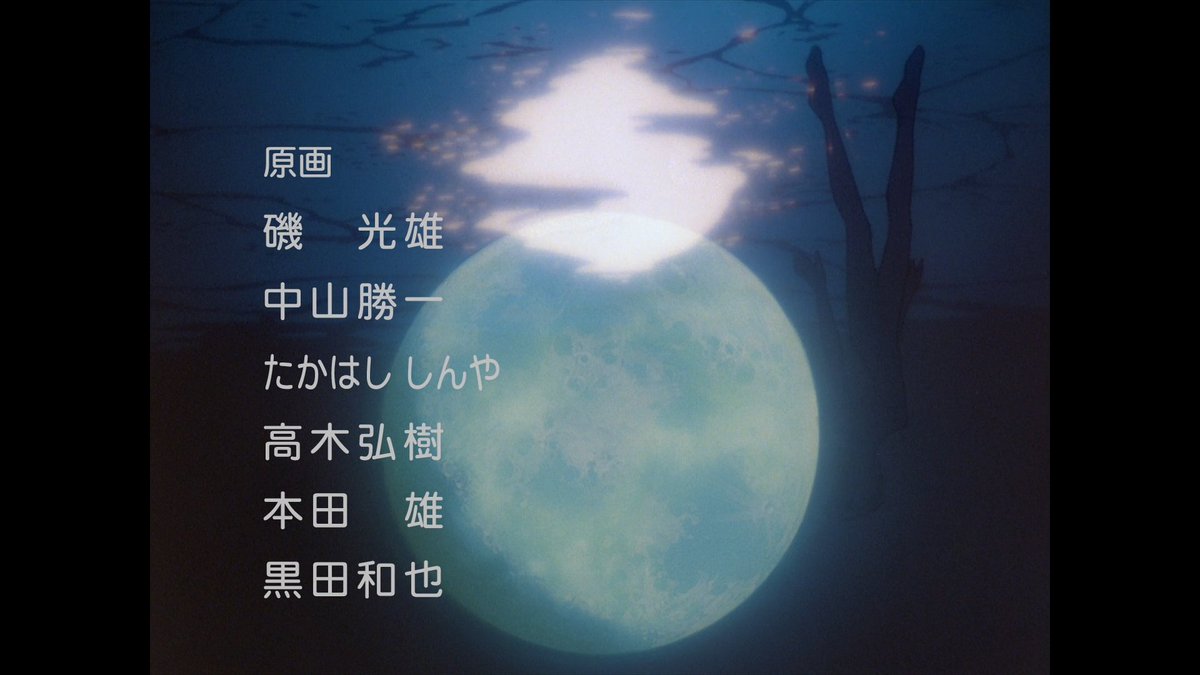
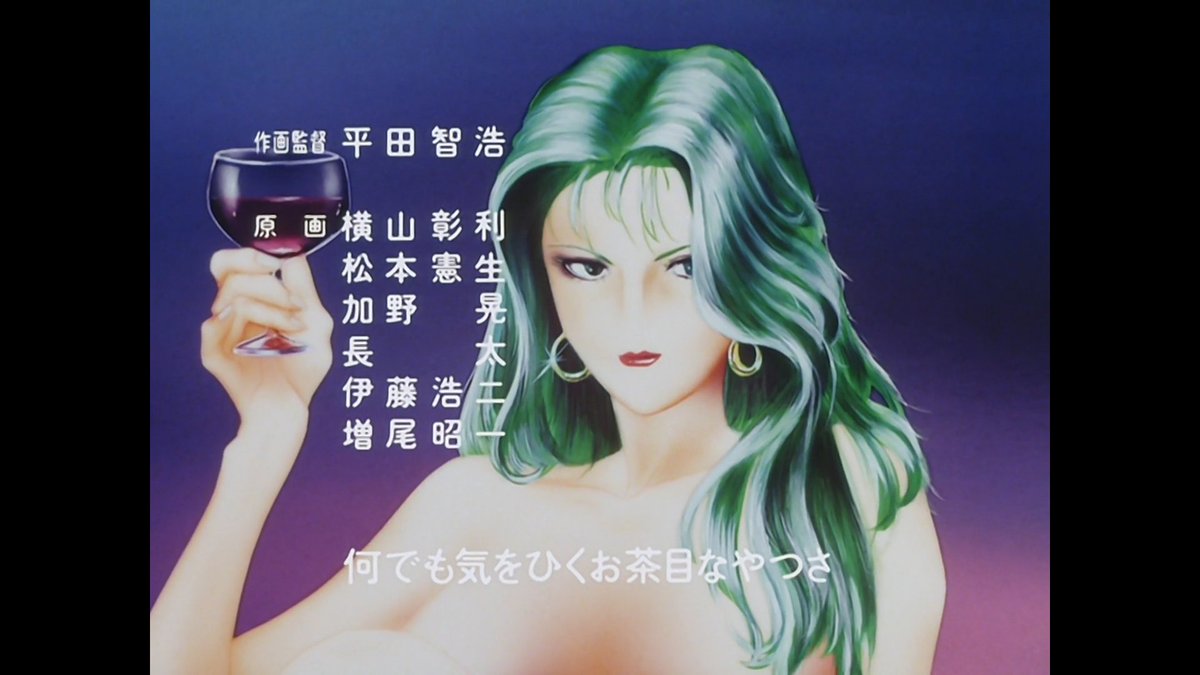
At this point we're still around 6, but it'd become commonplace to go for 8 or 10 + the non-credited one. The introduction of 2nd KA in that period only made the numbers rise, and the ending credits more complicated to read
I'd say there have been 2 important consequences from this:
- the role of the episode director and storyboarder became more important, whereas an individual animator's responsibility in the general look of an episode only decreased (bc they naturally animated less)
- the role of the episode director and storyboarder became more important, whereas an individual animator's responsibility in the general look of an episode only decreased (bc they naturally animated less)
And since animators are paid by the cut, that meant less money for animators to gain on a single episode ! This was compensated by the rise in the total number of productions, but the working conditions of animators (which have always been bad) only got worse
- but on the other hand, this enabled animators to try new things: that's when you see ppl like Norio Matsumoto animating most of their cuts on 1s or 2s, something that was very hard to pull off in TV production before then, simply bc you don't have the time for so many drawings
when you have 5 or 10 minutes of animation to produce in less than a month !
The 2000's and after are no longer my field of expertise, so I can't speak w/ as much certainty, but basically the number of animators kept going higher and higher
The 2000's and after are no longer my field of expertise, so I can't speak w/ as much certainty, but basically the number of animators kept going higher and higher
While the number of KAs on the latest AoT episode seem high, I'd say it's not rare for a normal TV episode to have between 10 and 15 KAs now ? + all the uncredited ones
And while I haven't looked into that yet, I can only imagine the number of in-betweeners has risen even more
And while I haven't looked into that yet, I can only imagine the number of in-betweeners has risen even more
Though, to finish on a less positive note, I have to add that the number of animators won't keep rising indefinitely: the average age of animators in Japan has only been rising in the last few years, meaning that less new ppl enter the industry
There *has* been some influx from foreign animators, but as much talent as they have, they're just not enough ppl as a whole to compensate for the lack of new animators. That's just one of the many issues plaguing the industry rn, but it's an important one
Short-term, with the ever-increasing number of productions, it means more work divided among the same number of animators, so poorer and poorer working conditions
Long-term, well... it means no new ppl, so basically the possibility of the Japanese industry to slowly fade out
Long-term, well... it means no new ppl, so basically the possibility of the Japanese industry to slowly fade out


