
 Read on Twitter
 TIP: Think of Array's reduce as a forEach, but with 1 added parameter, state. (a
  thread)
Reduce encapsulates the state inside it's reducer, while the forEach leaves it's state in the scope.
#100daysofcode #javascript
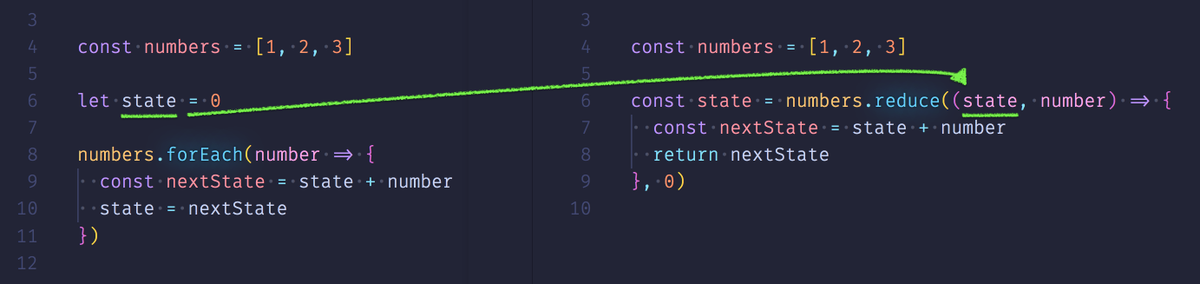
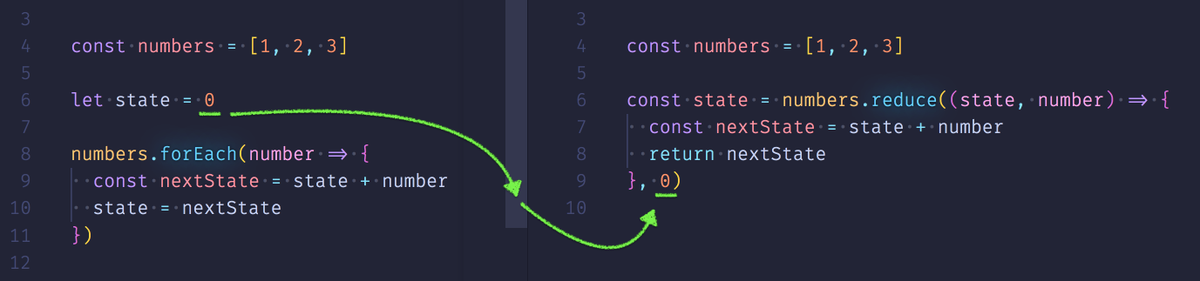
The initial value is no longer set in the scope, like forEach. The initial value is passed in as the second argument into the reduce function. (a thread)
#100daysofcode #javascript
thread)#100daysofcode #javascript
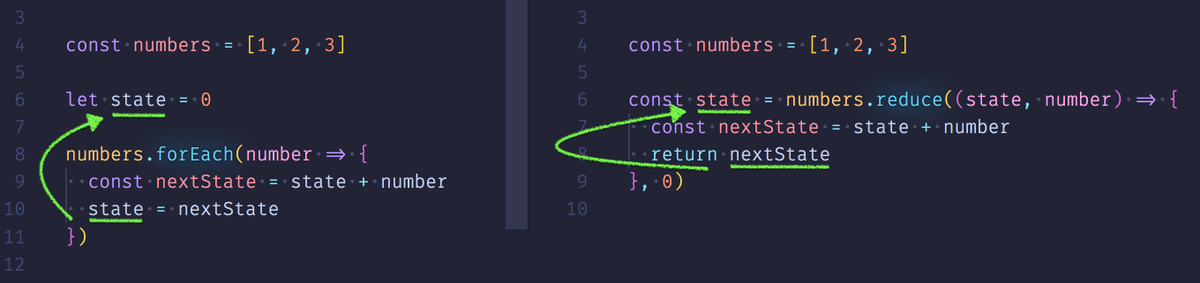
The forEach sets the next value with state in the scope, while the reduce returns the next value. (a thread)
#100daysofcode #javascript
thread)#100daysofcode #javascript
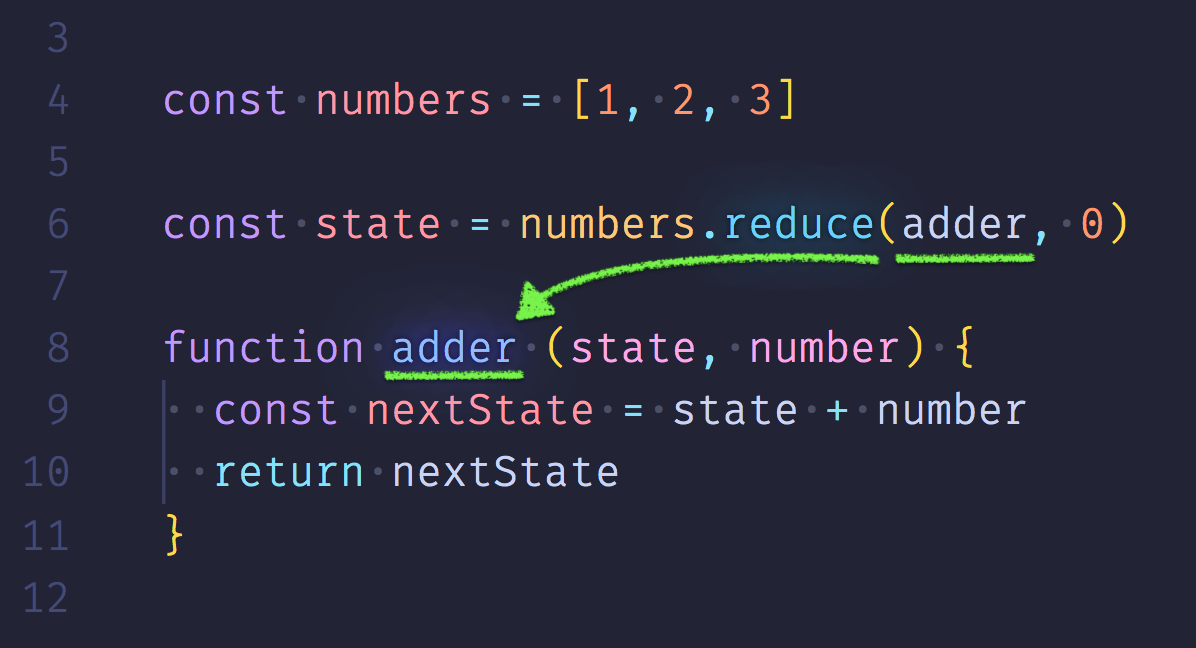
The reducer has encapsulated the state and it can be extracted out of the reduce function. This allows the reducer to be re-used, moved to a different file or even another library.
This is something a reducer can do that a stateful forEach cannot.
(a thread)
#100daysofcode
This is something a reducer can do that a stateful forEach cannot.
(a
thread)#100daysofcode
If you are still curious and want more, then I would recommend you click this link where I cover this comparison in my YouTube video on Array's reduce here:
(a thread)
#javascript #100daysofcode
(a
thread)#javascript #100daysofcode
Here's some source code with a stateful forEach and a reducer for you to play with: https://runkit.com/joelnet/5f08ac8fdc7e4b001a3cbc27
#100daysofcode #javascript
#100daysofcode #javascript


